Asphalt Paving Contractor Solano County Engineered Pavement
We engineer durable asphalt surfaces built to withstand Solano County’s severe temperature swings and heavy vehicle loading. From complete site reconstruction to precision asphalt overlays, our paving crews deliver verifiable structural strength that prevents premature pavement failure.
- Subgrade stabilization engineered specifically for Solano County expansive clay soils
- Caltrans-grade hot mix asphalt placed to strict structural thickness tolerances
- Full ADA compliance and Title 24 laser-guided slope verification on every project
SOLANO COUNTY PAVING OPERATED BY WE LOVE PAVING, INC.
Solano County Paving is operated by We Love Paving, holding active California contractor credentials under CSLB #1049649, DIR #1000590190, and CA CARRIER #571708. We provide complete asphalt paving, subgrade excavation, pavement reconstruction, and surface rehabilitation across the San Francisco Bay Area, delivering projects backed by verified engineering standards and strict regulatory compliance.
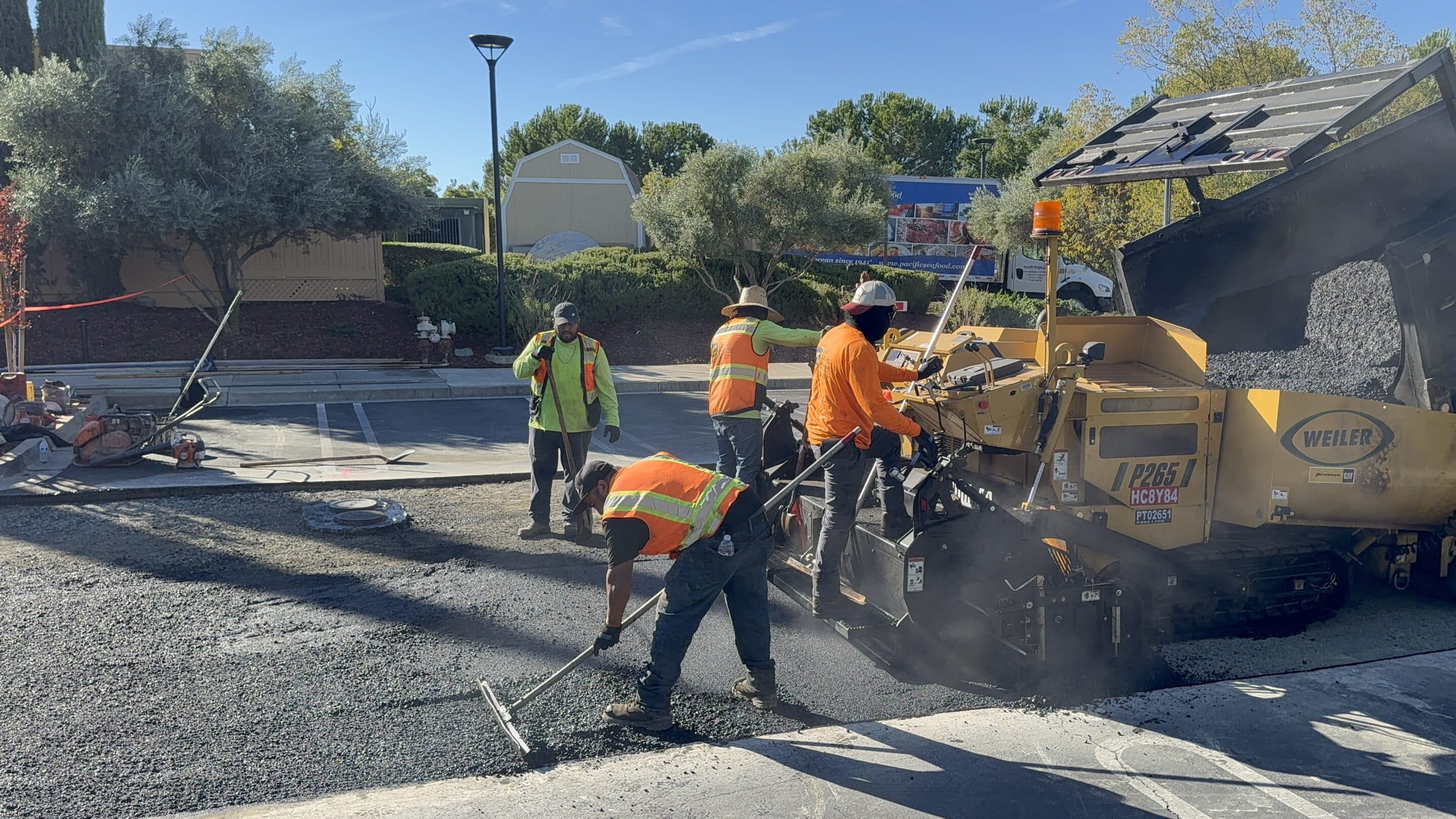
Engineered Asphalt Paving Designed for Solano County Ground Conditions
Asphalt surfaces in Solano County face distinct structural threats: expansive subgrade clays that shift with winter moisture and surface softening driven by sustained summer heat exceeding 100°F. When paving contractors bypass proper subgrade stabilization or lay inadequate asphalt lift thicknesses, drive lanes and parking surfaces rapidly develop alligator cracking, structural rutting, and hazardous depressions.
Our approach treats pavement as an engineered foundation system. By combining deep aggregate base compaction with performance-graded asphalt binders, Solano County Paving constructs resilient paved assets that maintain structural integrity across decades of heavy use. Explore our subgrade preparation methods, mix specifications, and compliance standards below to see how our engineering protects your capital investment.
REQUEST A SITE EVALUATION AND SPECIFICATION REVIEW
Full-depth asphalt paving and surface reconstruction across Fairfield, Vacaville, Vallejo, Benicia, and Dixon.
Technical Precision in Asphalt Mix Design and Pavement Construction
We design each asphalt installation based on traffic volume indices, subgrade soil dynamics, and precise surface drainage criteria. Every project utilizes Caltrans Standard Specifications Section 39 hot mix asphalt laid over thoroughly compacted aggregate base to eliminate localized depressions. By controlling placement temperatures and achieving verified in-place compaction density,
- Caltrans Spec Aggregates
- 95% Subbase Compaction
- Minimal Disruption
- Performance Graded Binders
Subgrade Engineering and Expansive Clay Remediation
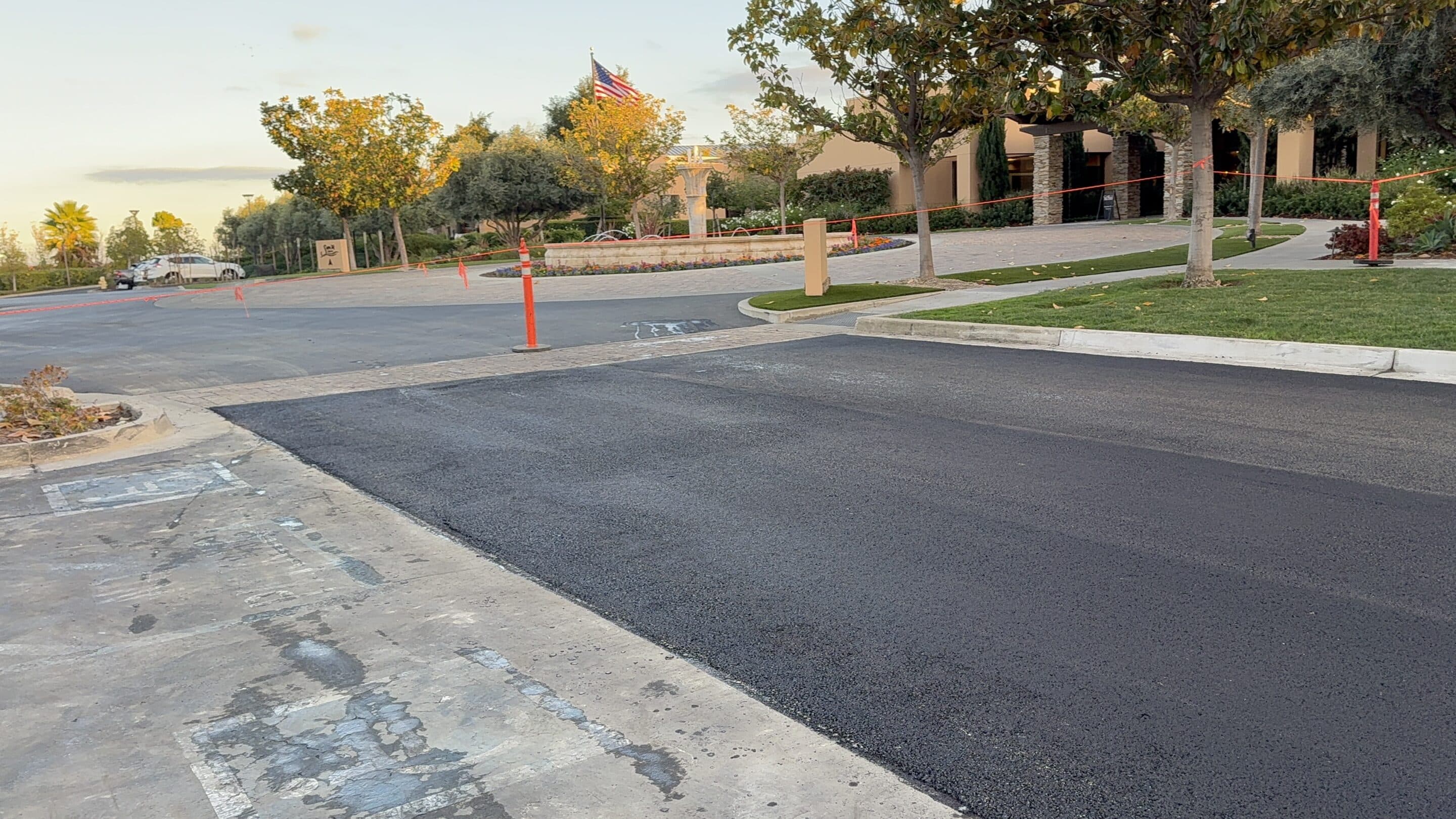
Subgrade Engineering and Expansive Clay Remediation
The native soils across Solano County particularly the heavy Capay and Clear Lake clay formations common along the I-80 corridor possess severe shrink-swell potential. During seasonal rain events, unreinforced subgrades absorb water, expand upward, and lose load-bearing capacity; during dry summer months, they shrink and crack. When asphalt is laid over an unstable subgrade without adequate mitigation, surface failure is immediate, regardless of the asphalt layer's surface thickness.
High-Temperature Asphalt Formulations and Drainage Precision
Solano County experiences aggressive thermal gradients, transitioning from marine-influenced conditions in Vallejo and Benicia to blistering inland heat in Vacaville and Dixon. Under sustained direct sunlight, surface asphalt temperatures routinely exceed 140°F, leaving conventional soft binders vulnerable to plastic deformation, tire scuffing, and wheel path rutting under heavy vehicle traffic. Simultaneously, paved assets must satisfy strict California Building Code Title 24 slope tolerances while preventing surface water ponding.
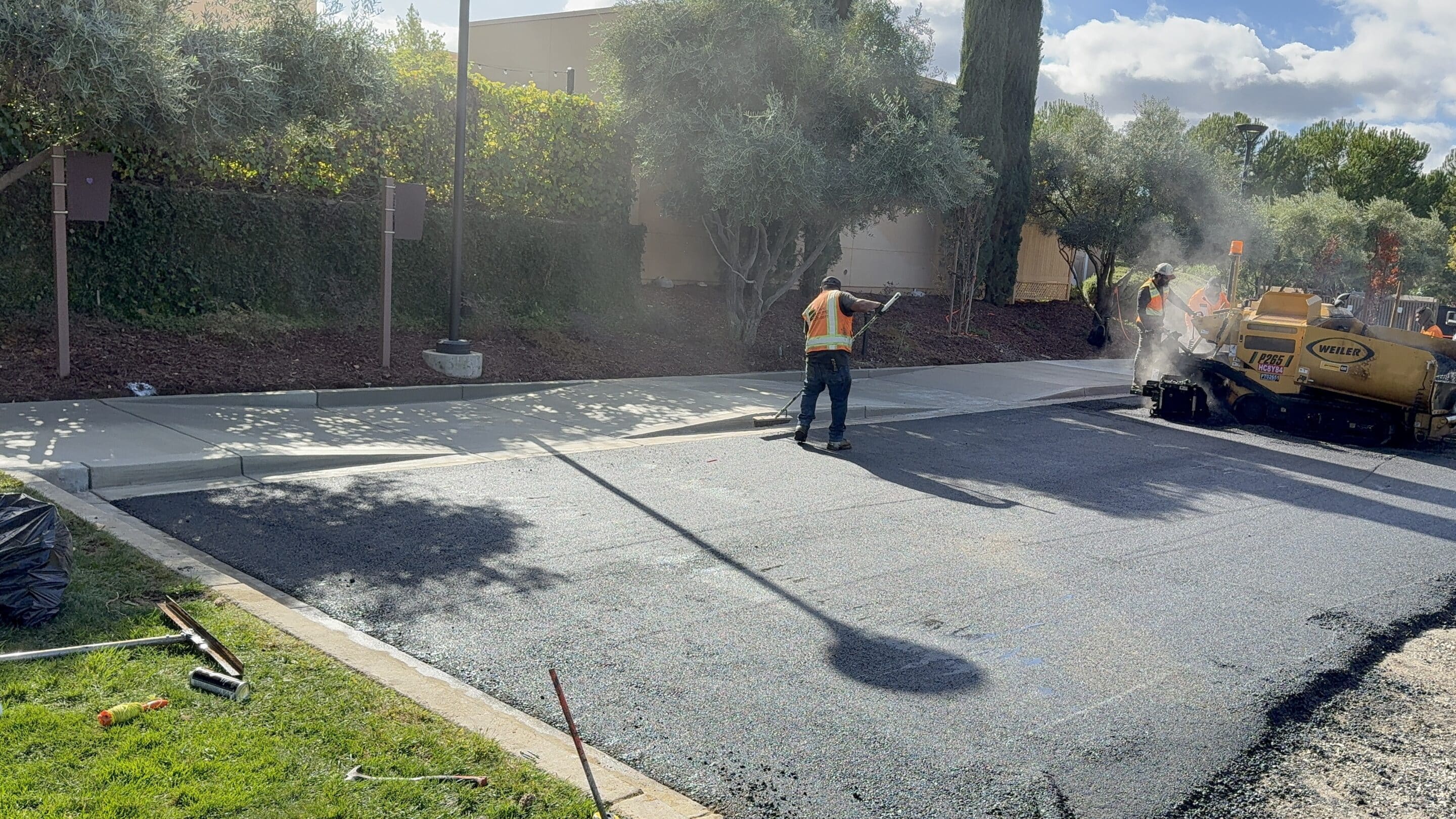
Technical Specifications for Asphalt Paving in Santa Clara
The following table details core structural variables, governing regulatory factors, field execution strategies, and verified technical standards applied to commercial asphalt paving projects in Santa Clara.
| Property Owner Concern | Solano County Environmental Cause | Engineering Mitigation & Standard |
|---|---|---|
| Alligator Cracking & Base Failure | High-plasticity Capay and Clear Lake clays expand when wet, flexing the asphalt mat under vehicle loads. | Subgrade proof-rolling to 95% Relative Compaction (ASTM D1557) combined with Caltrans Section 26 Class 2 Aggregate Base. |
| Wheel Rutting & Surface Shoving | Prolonged summer temperatures over 100°F soften standard asphalt binders under slow-moving vehicle axles. | High-stability Performance Graded Binders (PG 64-10 / PG 64-28M) with crushed angular aggregates. |
| Standing Water & Binder Stripping | Inadequate surface grades allow water retention, degrading the asphalt binder and accelerating surface raveling. | Laser-guided screed grade control maintaining 1.5% - 2.0% Finished Slope Gradient. |
| Accessibility Compliance Violations | Uneven settlement or over-paving creates cross-slopes exceeding mandatory California building code limits. | Pre-paving elevation profiling to guarantee ADA paths remain at Maximum 2.0% Title 24 Slope. |
Long-Term Pavement Durability Through Engineering Discipline
Constructing durable asphalt in Solano County requires addressing expansive native clays, summer thermal stress, and strict drainage mandates as interconnected engineering challenges. By combining geotechnical subbase stabilization with Caltrans-compliant mix formulations and laser grade verification, Solano County Paving delivers pavement installations that lower lifecycle maintenance expenses and prevent premature failure. Our disciplined construction process ensures your paved assets remain structurally sound, safe, and fully code-compliant.
Frequently Asked Questions About Asphalt Paving in Solano County
Technical specifications, local soil conditions, and construction considerations for property owners and managers.
How do expansive clay soils in Solano County affect new asphalt paving?
Solano County has high concentrations of Capay and Clear Lake clay, which swell significantly with moisture and shrink during hot, dry weather. If asphalt is installed directly over unmitigated clay, the shifting soil causes base displacement, resulting in longitudinal and fatigue cracking. We prevent this by testing the subgrade, achieving 95% compaction per ASTM D1557, installing woven geotextile fabrics where required, and placing a structural layer of Caltrans Class 2 Aggregate Base before paving.
What asphalt mix formulation is recommended for Solano County's climate?
Due to severe inland summer temperatures that frequently exceed 100°F in Vacaville, Fairfield, and Dixon, standard asphalt mixes can soften and develop surface rutting. We utilize Caltrans Section 39 Type A hot mix asphalt with performance-graded binders such as PG 64-10 or polymer-modified PG 64-28M. These binders maintain structural stiffness under high thermal loads, preventing tire scuffing and permanent wheel depression.
How does your team ensure compliance with California Title 24 during paving?
California Building Code Title 24 Chapter 11B mandates that accessible stalls and pedestrian access routes maintain a maximum cross-slope of 2.0% in any direction. Because drainage requires at least a 1.5% slope to avoid standing water, paving tolerances are exceptionally tight. We employ digital slope sensors and laser-guided paving equipment to achieve adequate sheet drainage while strictly honoring the 2.0% slope ceiling.
When is a full-depth reconstruction required instead of an asphalt overlay?
An asphalt overlay is only structurally viable if the existing aggregate base and subgrade remain stable and surface distress is limited to top-layer aging. If more than 25% to 35% of the paved area exhibits deep alligator cracking, pumping subgrade mud, or severe depressions, an overlay will quickly suffer from reflective cracking. Under those conditions, full-depth reclamation or complete structural reconstruction down to the aggregate base is necessary to ensure long-term performance.
What licensing and contractor credentials should be verified before hiring a paving contractor?
Paving contractors in California must hold an active Class A (General Engineering) or C-12 (Earthwork and Paving) license through the California Contractors State License Board (CSLB), carry general liability and workers' compensation insurance, and maintain registration with the Department of Industrial Relations (DIR) for public works compliance. Solano County Paving operates under We Love Paving, Inc., holding CSLB #1049649, DIR #1000590190, and CA CARRIER #571708.
What is the required curing timeframe before opening a newly paved asphalt surface to vehicle traffic?
Newly placed hot mix asphalt compacts at temperatures between 250°F and 300°F and requires cooling below 140°F before light passenger vehicle traffic can be allowed, which typically takes 24 hours. Full chemical curing of the asphalt binder takes between 30 and 90 days. During extreme summer heat in Solano County, we often recommend staging phased traffic access or waiting 48 hours before admitting heavy delivery trucks to prevent surface marking.
Request Your Estimate
Tell us what you need help with. We'll review the project details and follow up with next steps, no obligation.
Phone
707-310-8995
Email
[email protected]
Location
511 Jacklin Rd, Solano County
Hours
Mon–Fri 8:00 AM – 5:00 PM
Start Your Free Project Request
Use our quick estimate form to send your project details. It only takes a few minutes and helps us give you a better response.
- Project type and location
- Parking lot, driveway or commercial property
- Timeline and service needed
- Optional notes about damage or compliance issues
Serving Solano County & Silicon Valley
Solano County Paving serves Solano County, San Jose, Santa Clara, Sunnyvale, Fremont, Campbell and nearby commercial and residential areas.